4: Augmented Reality (AR)
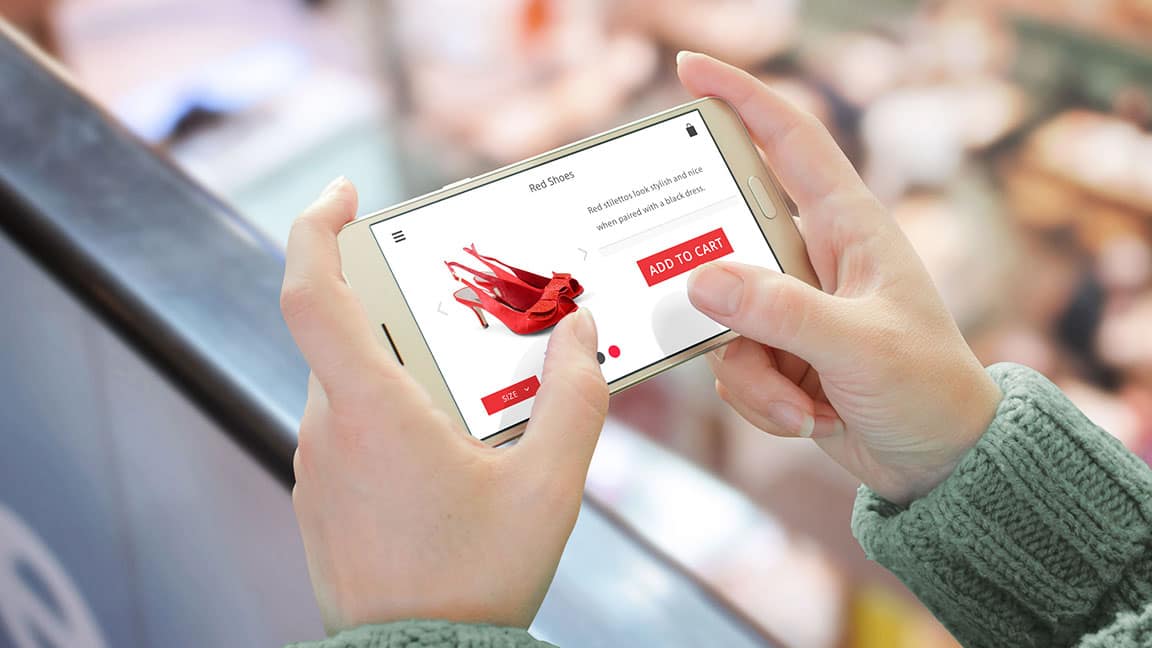
Online shopping is certainly the in-thing nowadays as it makes shopping so much more convenient. But, a huge chunk of customers still likes to go the old-school way. They prefer to buy a product once they get to experience it. For example, if a customer wants to buy furniture online, it will be better if you can give them the experience of how the piece will actually look inside their living room.
That’s what Augmented Reality (AR) does. It whisks customers away into a lifelike simulation that gives them the complete idea of how something will look and feel in real life. You should certainly incorporate the AR feature for your customers so that they are more inclined to buy your product. Since most of the e-commerce websites don’t offer this feature, you can make a mark for yourself in the competitive landscape by adding this.
5: Enhanced Shipping Options
In the last few years, the retail industry saw shipping and logistics stagnate. A few small improvements like free shipping were made here and there. But nothing big emerged until 2013, the year when the idea of same-day delivery became a mainstream phenomenon.
Nonetheless, things began to gain momentum in this area since then. Take the example of Amazon testing drone deliveries in the USA. By integrating with Google Maps, these specialized drones can identify the shortest route to the delivery destination. In 2020, this trend is likely to grow as major improvements in technology come along. So, there’s no denying the fact that drones will soon become a viable component of many retail businesses.
6: Subscription-Based Models
Subscription-based companies have gained immense traction in recent years. Much of it is because of the success they deliver. Disposable incomes are higher for people in their twenties than what was twenty years ago. However, the overall wealth is lower, indicating that this age group is making far less big one-off purchases.
By 2020, the business world can expect to see a tremendous rise in the number of subscription-based businesses than ever before. This is a noteworthy e-commerce trend that’s been steadily growing over the past few years. However, one of the most challenging areas for subscription-based companies, particularly those that send product boxes each month, is sustaining the sense of value and variety with each monthly delivery. This requires the idea generation to be strong enough and should be backed by a strong understanding of the target market.
7: Social payments
2020 will see the shopping experience of consumers becoming more seamless with the rise of social payment options. Popularized by Paypal, social payment options let users pay for their purchases using social media.
Today, almost all major social media platforms have come up with their own version. To name a few, you have ApplePay, WhatsApp Pay, GooglePay, Facebook payments, and Twitter Buy. These payment methods work just like a digital bank account. It’s just that it takes place on social media. Users can either buy products on these platforms or from online retailers that offer social payment methods.