
BioZyme
Seven brands, one platform
BioZyme makes nutrition for livestock, horses and dogs, and over the years each brand had grown its own website. VitaFerm, DuraFerm, Sure Champ, Gain Smart, Backyard Boost, Vitalize and AO-Biotics all ran separately, on separate WordPress builds, with separate templates and separate content to keep current. A dealer researching a product could land in any one of them and find a different BioZyme each time.
The idea was to stop treating the brands as seven companies. One identity across the group, then one platform underneath it: a headless Craft CMS build where the corporate site and every brand section share the same components, the same product data and the same publishing tools. Each brand keeps its own front, its own products, its own research and education. None of them keep their own codebase.
Pricing comes through a Shopify integration so the catalog stays accurate wherever a product appears. Deployment runs from GitHub. Every legacy URL from the old sites was mapped before launch, so the research and the rankings the brands had built up came with them.
Each brand came in with something worth keeping.
Years of packaging, a color a dealer recognizes across a feed store aisle, a mark that growers already trust. The temptation with a group rebrand is to flatten all of that into one house style and quietly erase what people buy by sight. We went the other way. Every brand kept its own color, its own mark and its own register: Sure Champ still talks like the show ring, Backyard Boost still talks like a hobby flock, Vitalize still talks like the barn. What changed is everything underneath. One typographic system, one photographic approach, one grid, one way of writing a product claim, so the brands stop looking like seven companies that happened to share a supplier and start reading as a family with a parent worth naming. BioZyme used to be the name on the back of the bag. Now it is the reason the front of the bag is believable.

A mark that survives a feed store
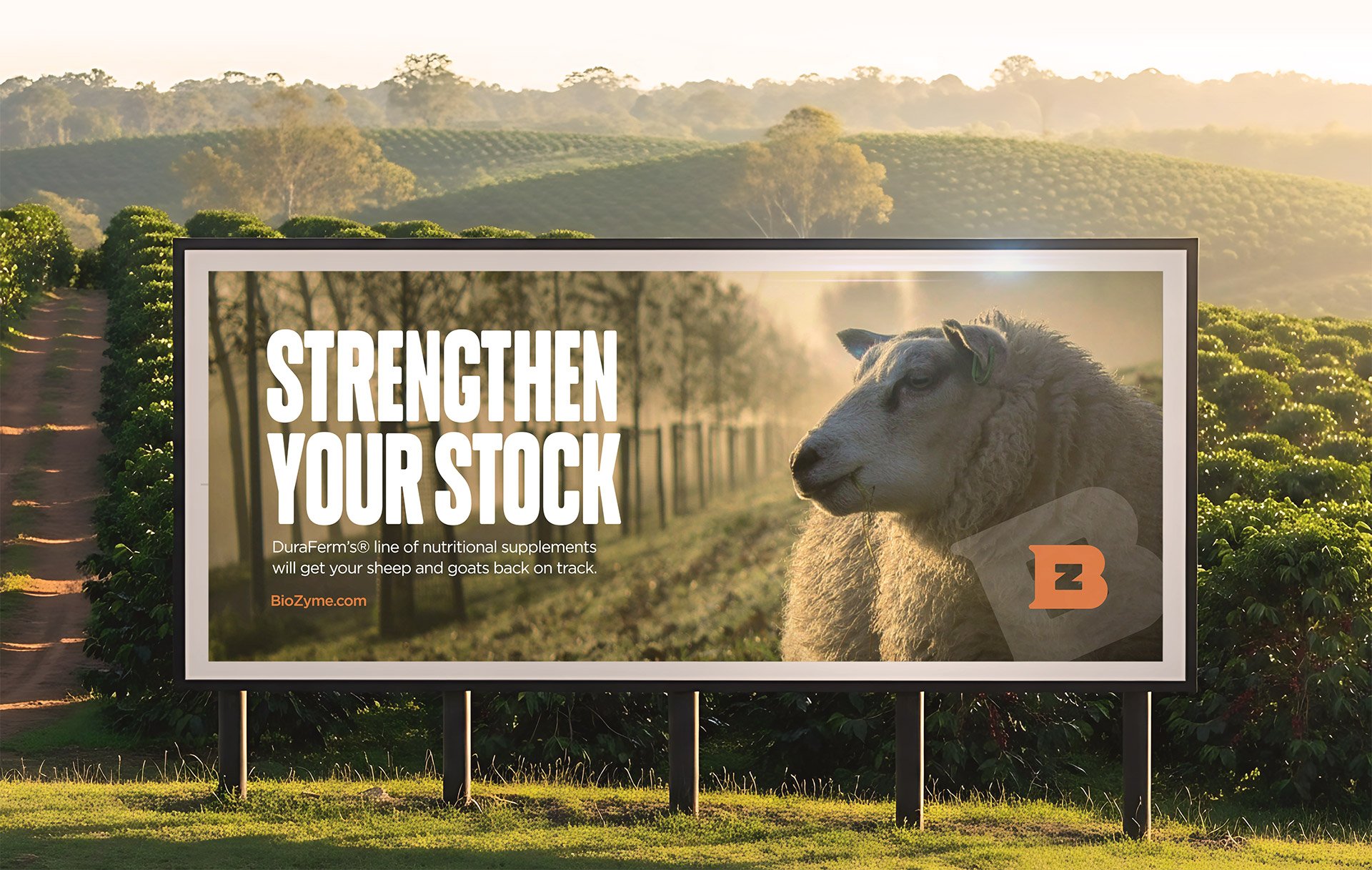
The identity had to work where the business actually happens. Stitched on a cap at a county show, printed on a fifty pound bag stacked six high, read from across a dealer aisle, shrunk into a favicon. We built the mark and the system around it to hold up at all of those sizes, in one color when that is all the process allows, and against photography shot in real barns rather than studios. A brand that only works in a presentation is not much use to a grower standing in a feed store.
Eight front doors, one set of keys
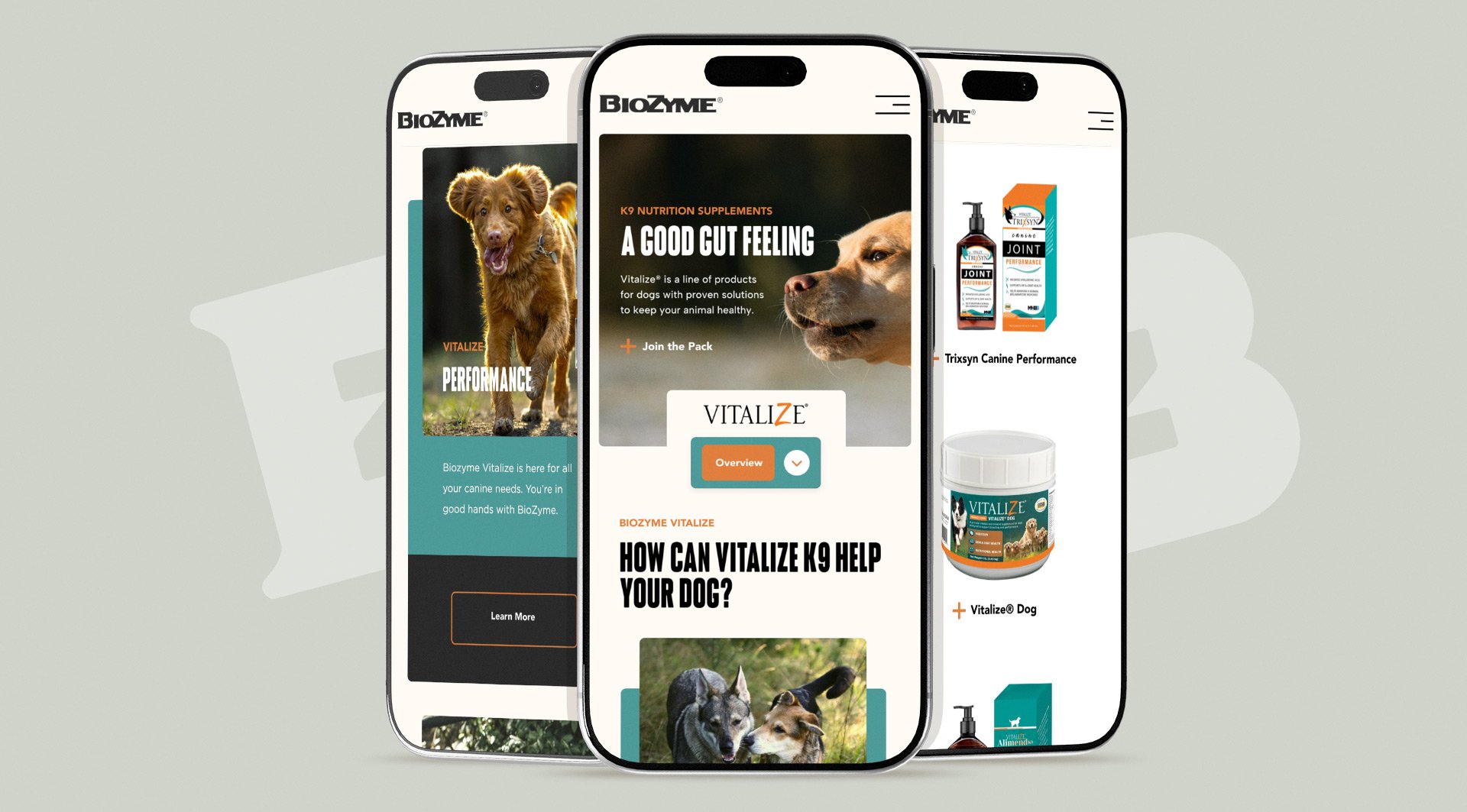
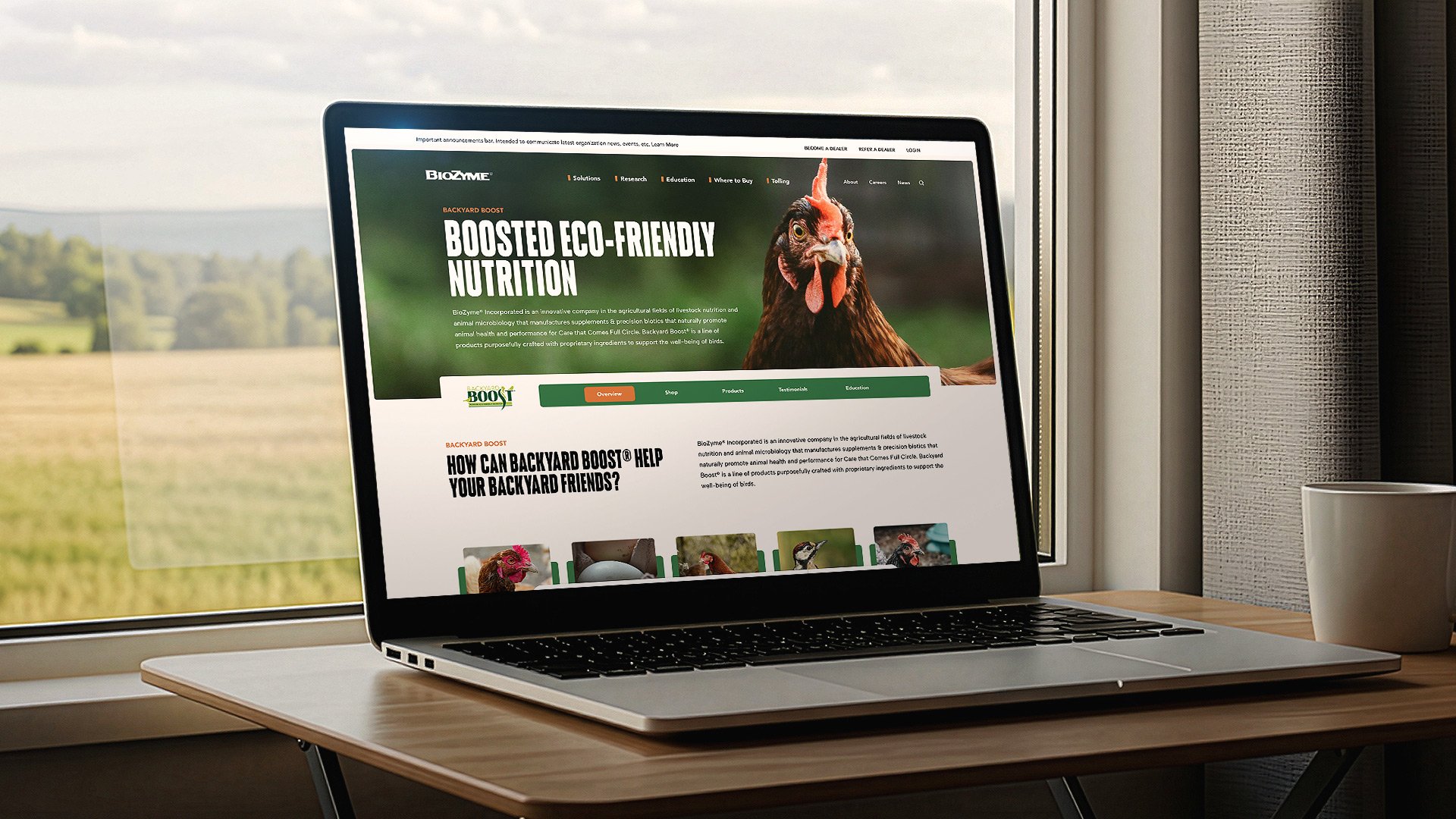
Every brand section is built from the same components. A product page, an article, a research summary, a dealer locator: all of them are the same pieces, configured differently, pulling from one catalog. That matters most to the people who have to keep it current. The team that used to log into seven dashboards to publish one announcement now writes it once, picks who it belongs to, and it appears in the right place with the right brand wrapped around it.
A tool that answers the real question
Then we built the thing the old setup made impossible. A grower picks their animal, checks off the problems they are up against, and gets a recommendation for each one, drawn from across the whole group rather than from whichever brand site they happened to land on. It reads like advice because it works the way the question is actually asked: not which product do you sell, but what do I do about this. Seven separate sites could never have answered that. One catalog can.
Lorem Ipsum Dolors
Then we built the thing the old setup made impossible. A grower picks their animal, checks off the problems they are up against, and gets a recommendation for each one, drawn from across the whole group rather than from whichever brand site they happened to land on. It reads like advice because it works the way the question is actually asked: not which product do you sell, but what do I do about this. Seven separate sites could never have answered that. One catalog can.
Lorem Ipsum Dolors
Then we built the thing the old setup made impossible. A grower picks their animal, checks off the problems they are up against, and gets a recommendation for each one, drawn from across the whole group rather than from whichever brand site they happened to land on. It reads like advice because it works the way the question is actually asked: not which product do you sell, but what do I do about this. Seven separate sites could never have answered that. One catalog can.
Lorem Ipsum Dolors
Then we built the thing the old setup made impossible. A grower picks their animal, checks off the problems they are up against, and gets a recommendation for each one, drawn from across the whole group rather than from whichever brand site they happened to land on. It reads like advice because it works the way the question is actually asked: not which product do you sell, but what do I do about this. Seven separate sites could never have answered that. One catalog can.